
Beyond the Numbers: Forum examines authoritarian inclinations and the state of democracy in Davao
Sep 16
3 min read
DAVAO CITY — What lies behind the numbers that show support for strong leadership, even among citizens who continue to value elections and democratic institutions?
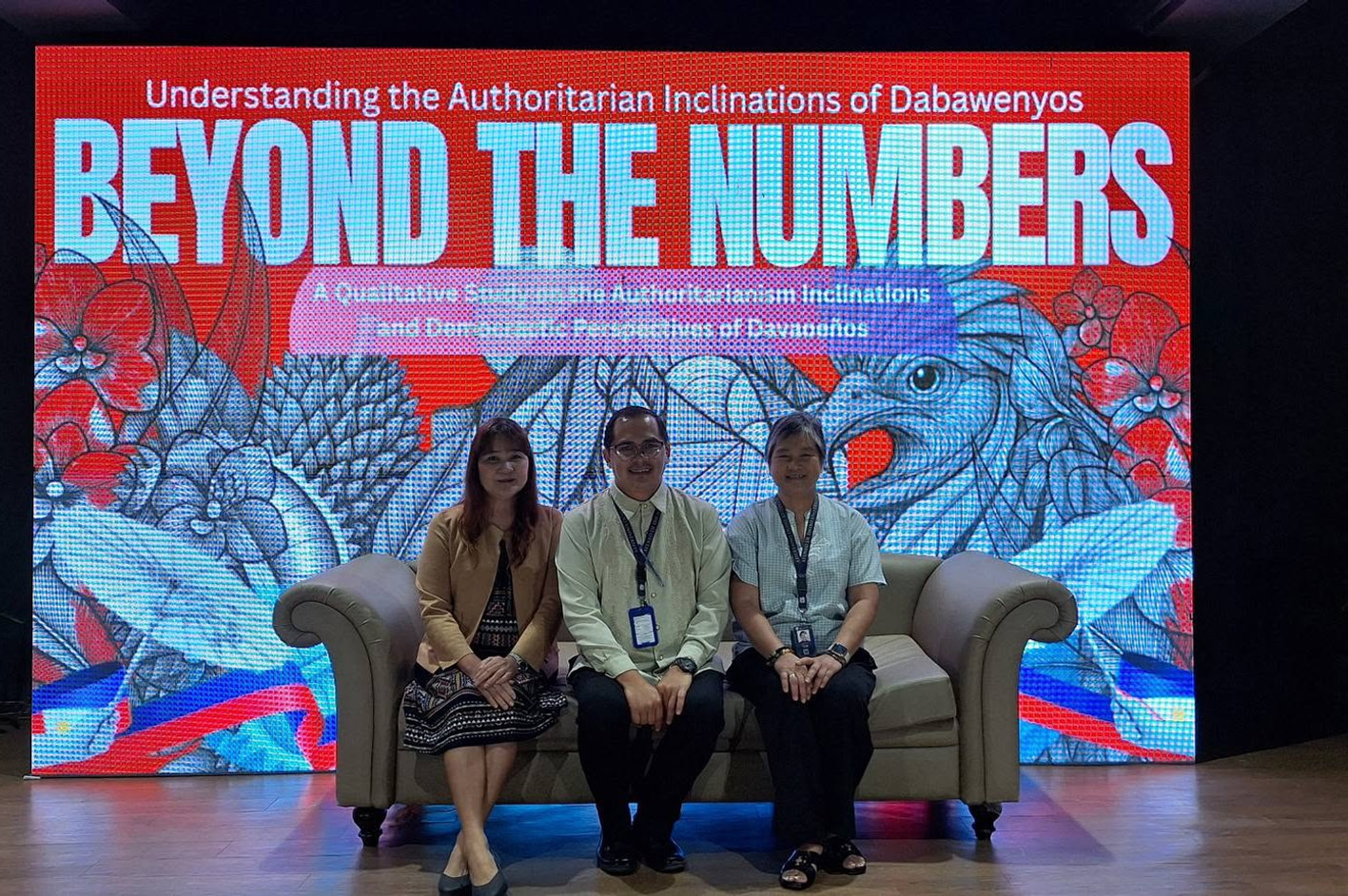
This question was at the heart of the Democracy Forum, “Beyond the Numbers: Understanding the Authoritarian Inclinations of Davaoeños,” which brought together representatives from government, civil society, academe, media, faith communities, and the youth to discuss the findings of a qualitative study on democracy and political attitudes in Davao.
The forum was led by the Ateneo Public Interest and Legal Advocacy Center (APILA) in collaboration with the Political Science and History Department, Anthropology Department, Social Research, Training and Development Office, and the Philippine Observatory on Democracy, with support from the Research, Innovation and Creative Works Office (RICWO) and the Community Engagement and Sustainability Development Office (CESDO) of Ateneo de Davao University.
Going beyond the numbers
The forum featured the presentation of research findings examining the factors behind authoritarian inclinations and democratic perspectives among Davaoeños.
Atty. Meong Cabarde Jr., researcher and Director of APILA, presented the first part of the plenary, “Authoritarian Inclinations: Understanding the Appeal of Strong Leadership.” His presentation examined the security-driven preference for strong leadership, historical memories of disorder, performance-based legitimacy, and the normalization of strongman leadership.
The research suggests that the attraction to strong leadership cannot simply be understood as a rejection of democracy. Rather, it reflects a complex political outlook where order, security, effective governance, and visible results may be given greater weight in evaluating political leadership.
Dr. Rosalinda Tomas, researcher and Chairperson of the Anthropology Department, presented the second part, “Who Shapes Democratic Imagination: Social Media, Information Ecosystems, and Public Opinion.” Her presentation explored how people's political perceptions are shaped by the information environments in which they participate.
Completing the plenary presentations was Dr. Christine Diaz, researcher and Director of the Social Research, Training and Development Office, who discussed “Reclaiming Civic Education for Democratic Citizenship.” Her presentation emphasized the role of civic education in developing citizens capable not only of participating in elections but also of engaging critically with institutions, information, public policy, and those who exercise political power.
From “strong leadership” to “authority-based democracy”
One of the significant ideas emerging from the research is the characterization of Davao's political experience as an “Authority-Based Democracy.”
The concept captures a tension: citizens may continue to participate in elections and recognize democratic institutions while simultaneously expressing a strong preference for authority, order, decisive leadership, and performance.
The forum therefore moved away from asking whether Davaoeños are simply “democratic” or “authoritarian.”
Instead, it asked a more difficult question:
What kind of democracy is taking shape in Davao?
The study also identified political dominance and limited pluralism, structural inequality, and elite capture as important factors in understanding the democratic environment.
“Reactions from the Frontlines of Democracy”
The research findings were followed by “Reactions from the Frontlines of Democracy,” bringing together voices from different sectors.
Representing government was Mr. Oscar Casaysay of the Davao Culture and Arts Office. The civil society perspective was provided by Ms. Isabelita Solamo-Antonio of Pilipina, while the academe was represented by Dr. Ian Clark Parcon of the Faculty of Philosophy. Ms. Kath Cortez of Davao Today provided the media perspective.
The forum also heard from the faith and youth sectors, with Ptr. Danniel Pantoja of Peacebuilders Communityrepresenting faith communities and Mr. Cobbie Jan Canda of Kabataan SMR representing the youth.
Their reactions brought the research findings into conversation with the realities experienced by different sectors of Davao society, particularly on questions of political participation, information, dissent, civic engagement, and democratic accountability.
The ensuing open forum allowed participants to engage the presenters and reactors directly.



Comments